

One of the hardest financial disciplines is having ample savings. No matter how much someone has saved up, there always comes an “opportunity” to spend or invest in. Usually, this means weighing current savings against the new investment, expense, project, trip, etc. Don’t get me wrong, savings, by definition, build up cash for future purchases or investments. But at what point does spending built-up savings go too far? How much should you have in savings regardless of the circumstances? The answer is more of a spectrum than a number, but understanding where you land on that spectrum can help you determine whether you can spend extra or buckle down.
Key Takeaways
- Emergency funds of at least 3-6 months of expenses in a highly accessible account are the best mechanism for preventing financial stress.
- Business owners in particular face seasonal revenue streams and may have a lack of predictability in their income – in these cases, it may be wise to save up to 12 months of expenses.
- Resist the temptation to dip into your emergency fund for earmarked projects like a home renovation or buying a car.
Why You Should Have Savings
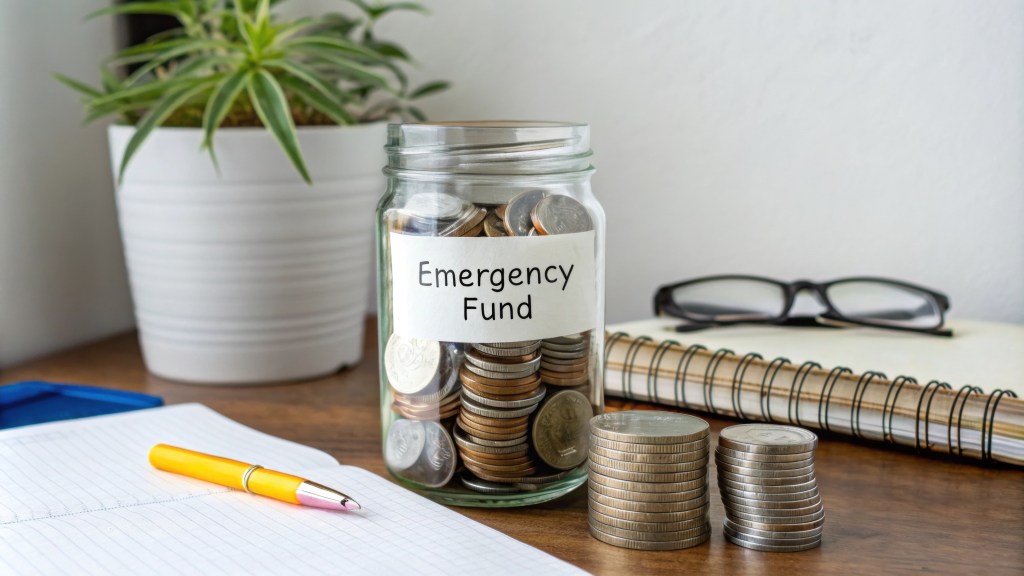
Nearly everyone has heard of the concept of an Emergency Fund. Typically, the financial industry recommends saving 3-6 months of expenses in a highly accessible account. This cash is usually held in a bank savings account, high-yield account, money market fund, or brokerage account. Importantly, this money is not for earmarked projects like starting a business or buying a house.
The purpose of the emergency fund is, well, for emergencies. Put simply, it’s financially healthy to have cash set aside for unexpected events. If you lose your job, have a health crisis, need to travel suddenly, etc., you could have a significant amount of expenses in a short amount of time. Having money set aside for when the rainy day comes can help smooth a lot of financial anxiety, as well as create a buffer from needing to go into debt.
Losing a job is especially hard for business owners. Without being as drastic as closing the business, there certainly can be months and seasons where there is not enough revenue coming in. Psychologically, during a slow season, having six months of expenses as a ‘runway’ feels far more freeing than having just one.
To make matters worse, many business owners are single-income households. This means that both the business finances and the personal finances are dependent on one source of income. This is easier said than done, but a slow business month shouldn’t significantly affect your personal expenses. If you are worried about paying for day care (or using debt to pay for it) because business is slow, it may be an indication that there is not enough saved up.
How Much Should You Save Up?
The exact level of savings for each person will vary, depending on factors related to business and personal finances. Most times, emergency savings are quoted in terms of months for expenses. For example, imagine spending on average about $10,000 per month. If you have $120,000 in savings, or 12 months of expenses, your reaction to unexpected financial events would be much better than if you had $15,000. Low sales in a month would not mean much. Flying unexpectedly across the country to visit family would be a drop in the bucket. A midnight trip to the hospital wouldn’t even cross your mind (hopefully).
Starting from zero, most can agree that zero months of savings is not the answer. Contributing to retirement accounts, making new investments, luxury business costs, and an increased lifestyle should all come secondary to building emergency savings.
For those with less than 3 months of expenses, the primary goal should be to build savings. Most people (and businesses) live paycheck-to-paycheck because they do not do this. Many 6 and 7-figure income people feel like they cannot get ahead, mainly due to this issue. It is okay to be in the 1-3 month savings range temporarily. But I’d argue that very few people should target this range for their savings.
The amount of savings will be relative to your risk level, however. Some owners may balk at wasting $120,000 sitting in an account “doing nothing”. For those in a growth mode or who make more frequent investments, it may be worth the risk of only having a few months of expenses saved up. But the tradeoff must be assessed. Only having a month or two in savings runs a high risk of an unfortunate event ruining everything.
Most recommendations start with a base savings of 3-6 months of expenses. This is generally viewed as enough of a cushion to buffer against many of the larger uncertainties that could hit. Once they do, your savings then appropriately drop to cover the expenses. If savings naturally fall into the 1-3 months, then your emergency fund worked successfully. Then over the next few months, prioritize replenishing the savings back to its original level.
For certain people, targeting more than 6 months may be ideal. Those with irregular income throughout the year are a great example. If summer is peak sales for the year, having 3 months of expenses for the winter may not be enough. Those who are single-income households, have large families, and/or suffer from medical complications, all have serious arguments to store additional cash as well.
Where Should I Target My Savings?
Start with 3-6 months of expenses and build from there. Part of life is dealing with unexpected events, and in the modern day, the financial consequences that are attached. Having the ability to pay off emergency expenses or have a runway if income stops is a sign of good financial health. The exact amount that each person has saved will be dependent on them and their specific circumstance. The more factors that rely on your income (whether family, health care, etc.), the higher the level of savings needed. Ultimately, setting aside money for the unexpected isn’t exciting, but it’s essential in modern personal finance.

 TC Falkner